In the rapidly evolving world of Commercial Lighting Solutions, one of the most critical decisions a project manager or lighting designer face is choosing between CCT (Correlated Color Temperature) Adjustable and Single Color Track Lights.
While Single Color LEDs have been the industry standard for decades, the rise of the 3-phase CCT adjustable track light has revolutionized how retail spaces, galleries, and offices approach illumination. This guide provides a deep-dive comparison to help you determine which technology offers the best ROI for your specific application.

Before diving into the comparison, we must understand Correlated Color Temperature (CCT). Measured in Kelvins (K), CCT describes the "warmth" or "coolness" of a light source.
Warm White (2700K - 3000K): Creates a cozy, inviting atmosphere. Ideal for high-end boutiques and hospitality.
Neutral White (3500K - 4000K): Clean and balanced. Best for general retail and office environments.
Cool White (5000K - 6500K): Mimics daylight. Ideal for jewelry displays, healthcare, and high-detail task areas.
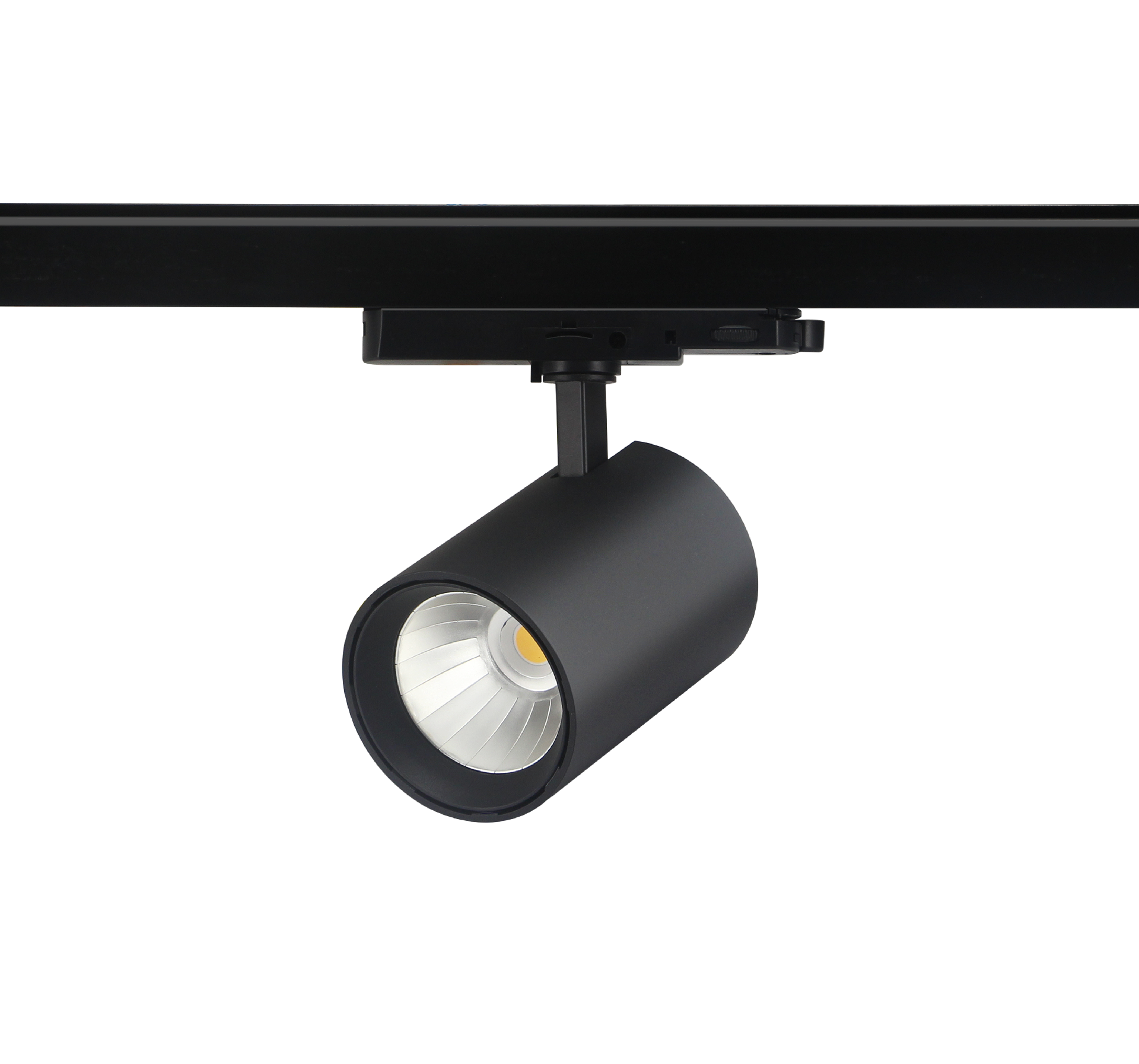
Single color track lights are engineered to emit one specific Kelvin temperature. They are the "specialists" of the lighting world.
The Advantages:
Maximum Luminous Efficacy: Since the COB (Chip on Board) is optimized for one spectrum, these lights often yield higher lumens per watt.
Color Consistency: In large-scale projects, single-color units ensure an identical "binning" match across hundreds of fixtures.
Lower Cost: Simplified internal circuitry makes these units more budget-friendly for fixed-environment projects.
The Disadvantages:
Zero Flexibility: Once installed, the "mood" of the room is locked in. If a clothing store changes its summer collection from warm earth tones to cool blues, the lighting may suddenly feel "off." and need to replace the lamps, which is more expensive.
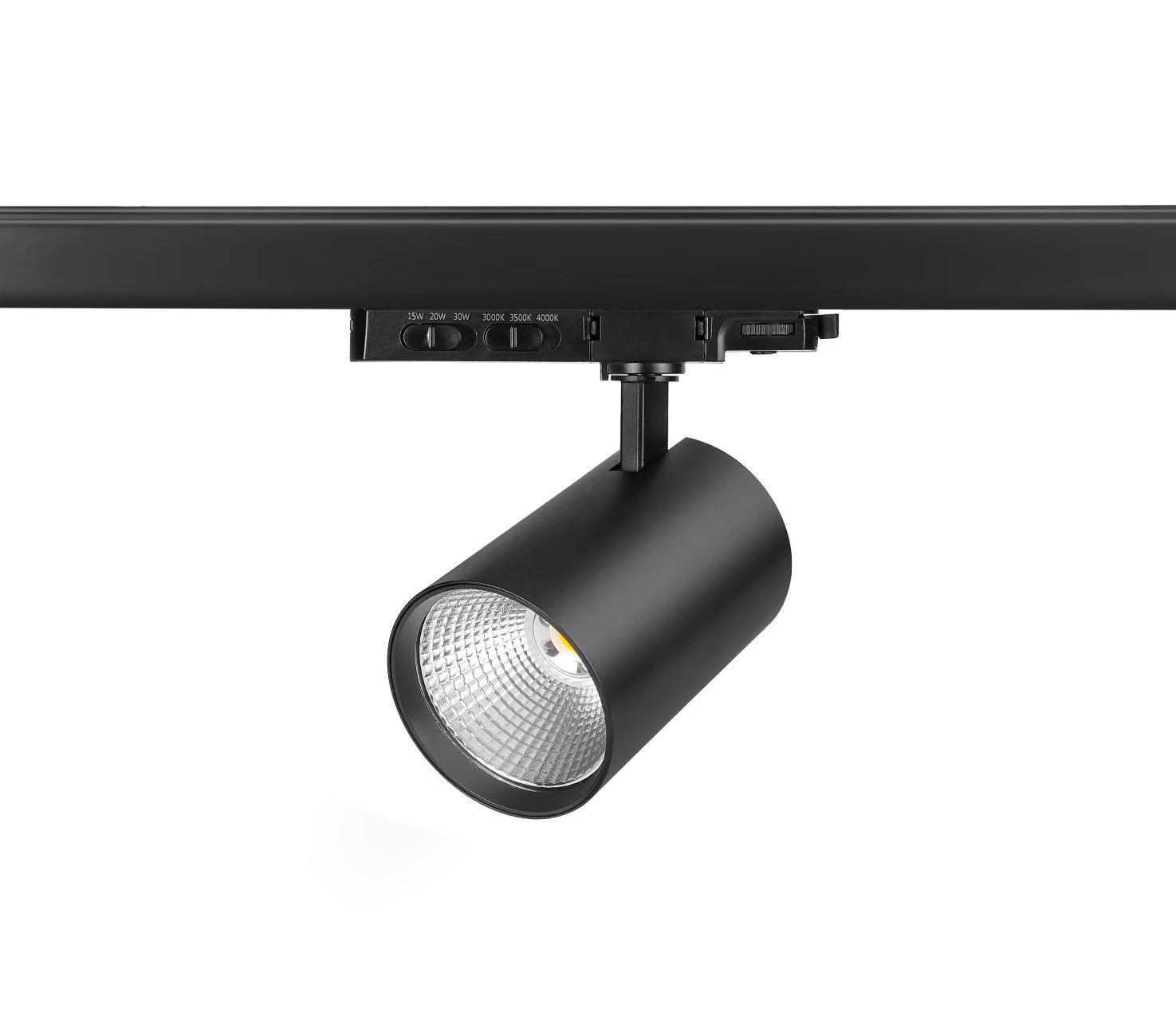
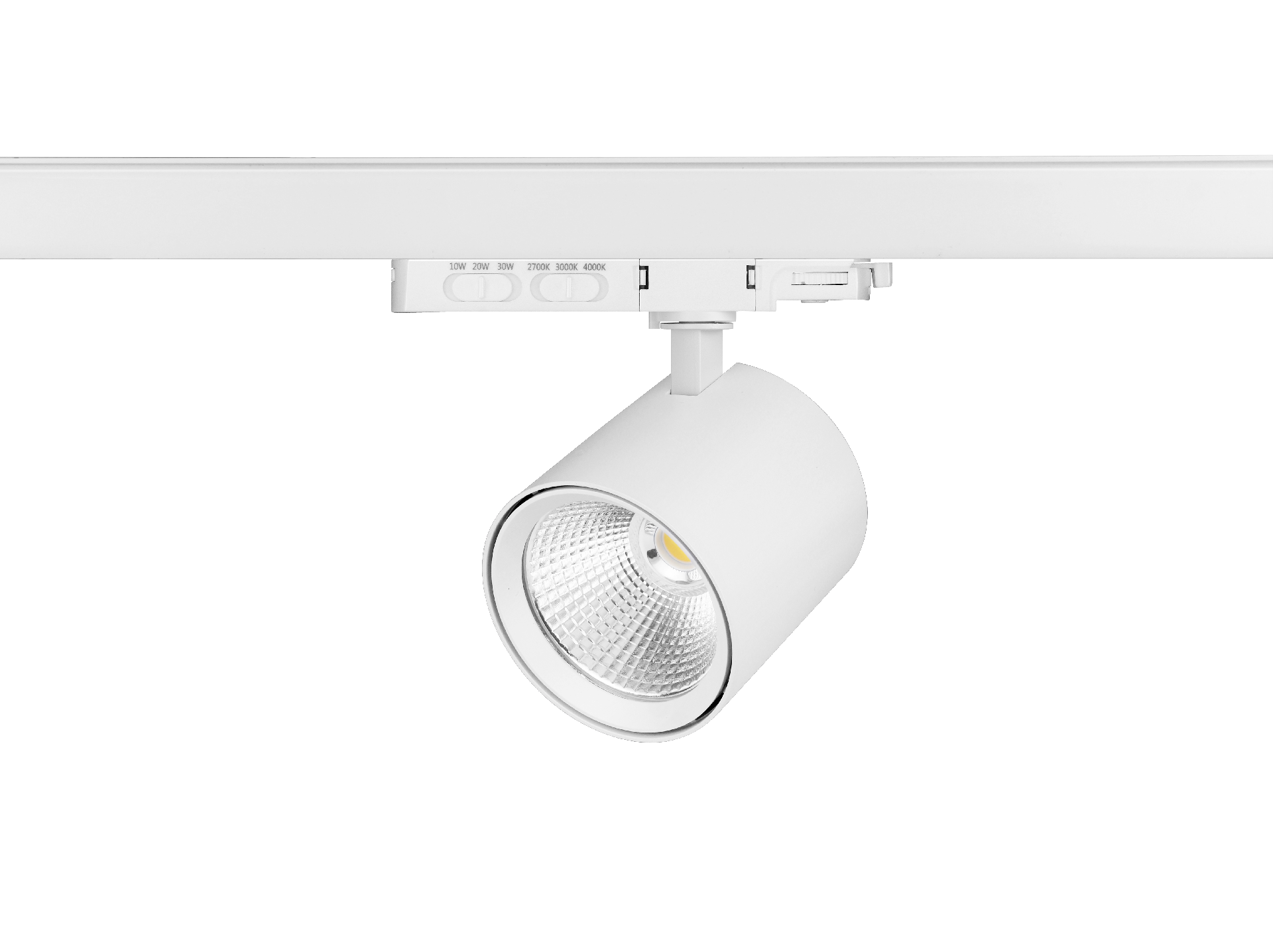
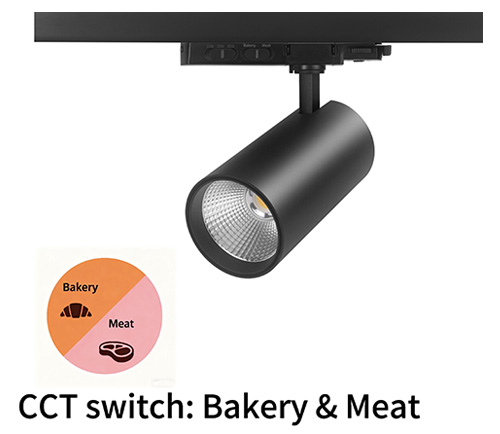
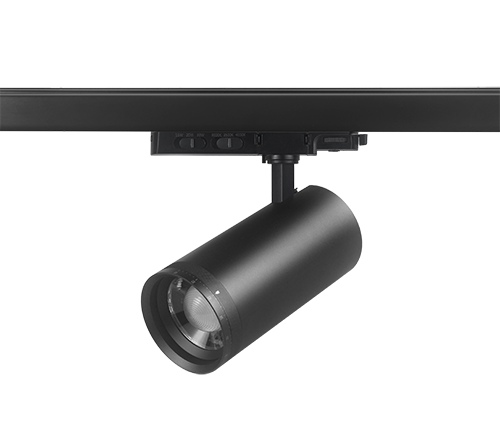
A 3-phase CCT track light typically features a manual dip-switch that allows users to toggle between 3000K, 4000K, and 5000K within a single fixture just by switching the bottom on the track adapter..
The Advantages:
Inventory Consolidation: For wholesalers and contractors, instead of stocking three different SKUs, you only need one. This drastically reduces warehouse costs and simplifies logistics.
On-Site Fine-Tuning: Designers can adjust the light temperature during the final walkthrough to perfectly match the interior finishes and paint colors.
Future-Proofing: As the use of a commercial space changes (e.g., a showroom turning into a workspace), the lighting can be adapted without replacing hardware.
The Disadvantages:
Slightly Higher Component Cost: The inclusion of multi-spectrum COBs and specialized drivers adds a premium to the unit price.
Complex Circuitry: Requires high-quality manufacturing (like Pustlux standards) to ensure the CCT switch remains durable over thousands of hours of use.
But through technical solutions, this CCT track light can be used for at least 50.000+hours.
| Feature | Single Color Track Light | CCT Adjustable Track Light |
| Flexibility | None (Fixed) | High (3-in-1 or Stepless) |
| Inventory Risk | High (Potential for dead stock) | Low (Universal 1SKU=9 options) |
| Light Quality (CRI) | Excellent (Ra > 90/97) | Very Good (Ra > 90+) |
| Lumen Output | Optimized (100-120 lm/W) | Slightly lower (90-110 lm/W) |
| Installation | Standard | Standard (Compatible with 3-phase) |
Case Study A: Art Galleries & High-End Museums
Winner: Single Color (High CRI)
Museums require absolute precision and the highest possible Color Rendering Index (CRI). Since the lighting requirements for specific exhibits are usually calculated by curators in advance, the stability and peak performance of a single-color 97+ Ra fixture are preferred.
Case Study B: Retail Chains & Pop-up Shops
Winner: CCT Adjustable
Retailers frequently change displays. A 3-phase CCT track light allows the store manager to switch to 3000K for a "Cozy Autumn" promotion and 5000K for a "Summer Tech" launch, all using the same infrastructure.
Case Study C: Modern Office Spaces
Winner: CCT Adjustable
With the rise of Human-Centric Lighting (HCL), offices often require cooler light in the morning for productivity and warmer light in the afternoon for employee well-being.
In high-end Commercial Lighting Solutions, the 3-phase track system is the backbone of CCT control.
Independent Control: You can set different "zones" on the same track to different color temperatures.
Balanced Load: Distributing CCT adjustable lights across three phases prevents electrical overloads in large installations.
Longevity: Pustlux 3-phase adapters are designed to handle the slightly higher heat signature of multi-spectrum LED chips.
While a CCT-adjustable light might cost 10–15% more upfront, the Total Cost of Ownership (TCO) is often lower:
Elimination of "Wrong Kelvin" returns: No more shipping back 500 units because the client decided 4000K was "too cold."
Reduced Labor: On-site adjustments take seconds; swapping out fixed units takes hours of expensive electrician labor.
If your project has a fixed, unchanging purpose with a strict focus on maximum lumen efficiency, Single Color Track Lights remain a solid, cost-effective choice.
However, if you are looking for versatility, risk mitigation in procurement, and future-proof design, the CCT Adjustable Track Light is the undisputed champion of modern commercial spaces.