Track Light vs Linear Track Light: Flexible Power and CCT Solutions for Commercial Lighting
In this article, we compare track lights and linear track lights for commercial applications, explain how switchable power and color temperature improve project flexibility, and show why combining both products can create a more adaptable retail lighting system.

1. What Is the Difference Between a 3CCT Track Light and a Linear Track Light?
The fundamental difference between an LED track light and a linear track light is their light distribution and intended lighting function.
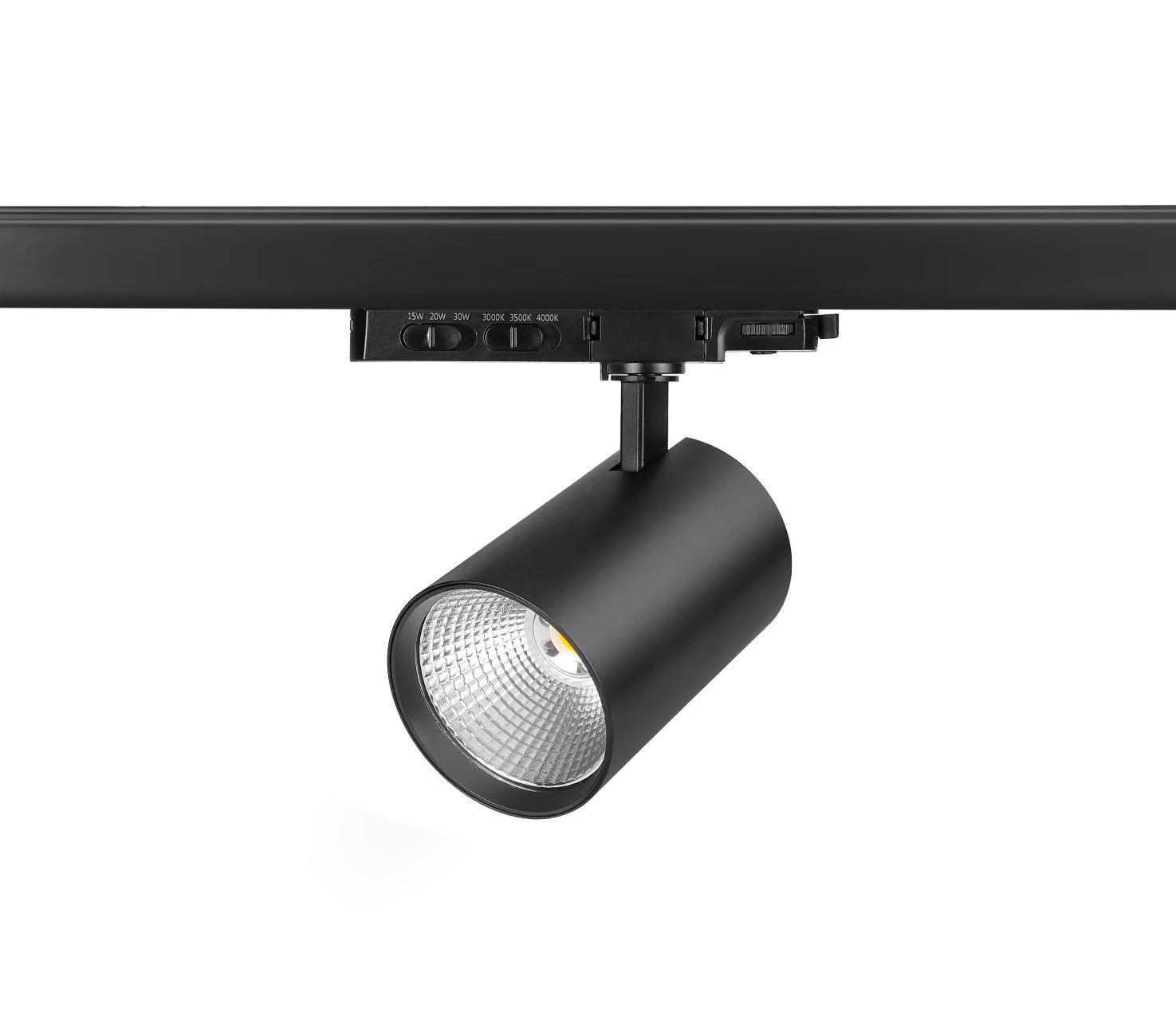
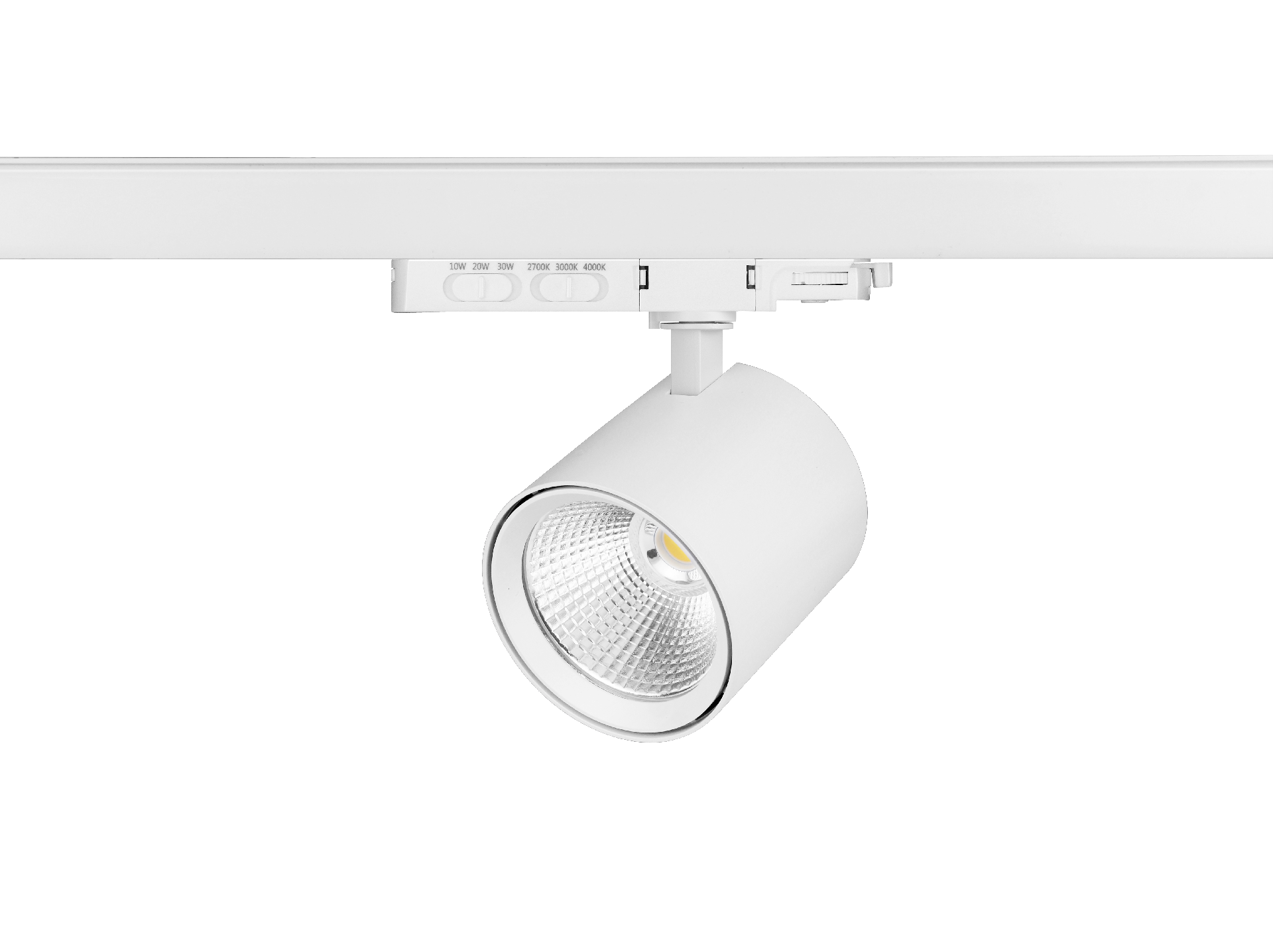
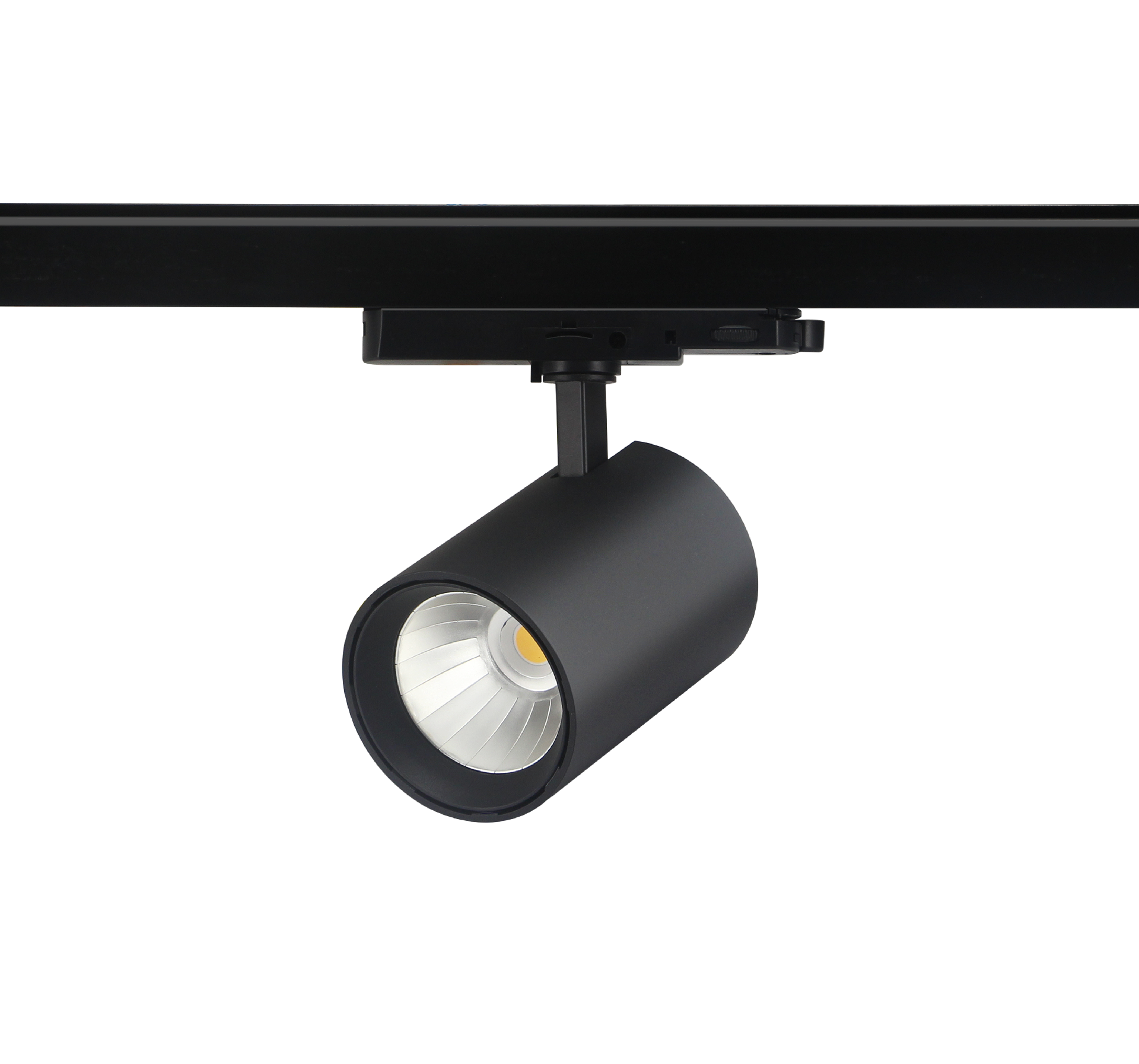
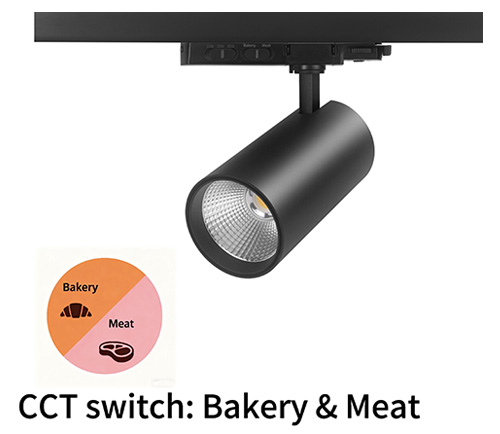
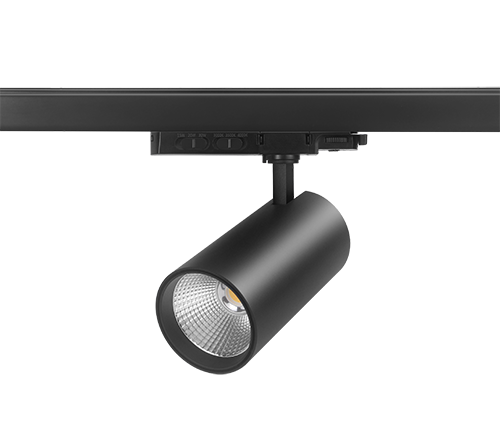
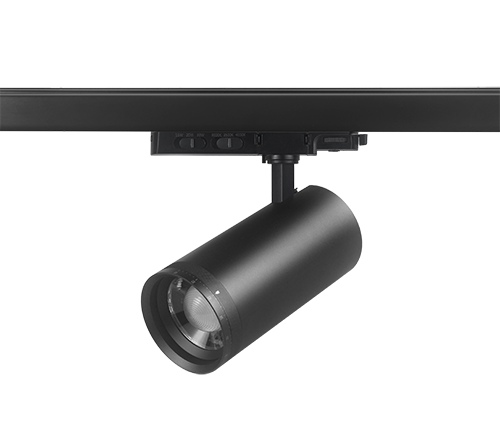
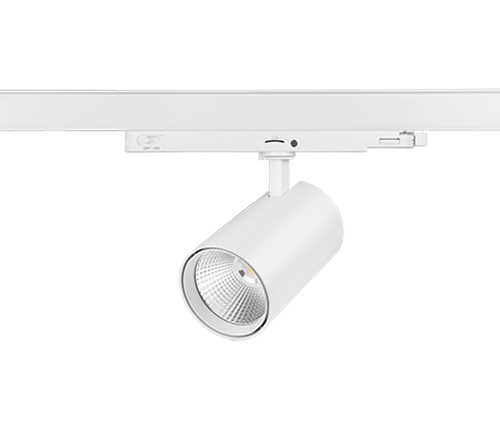
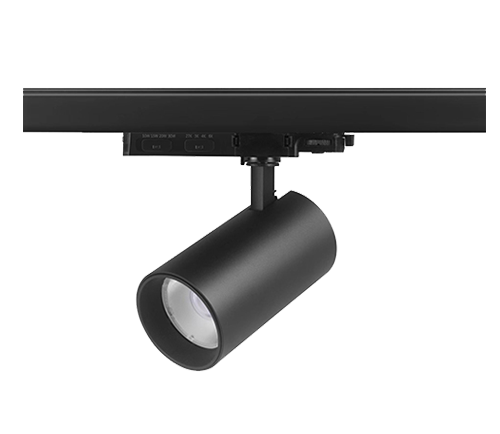
A traditional LED track light is generally a compact, directional luminaire with an adjustable head. It is particularly effective when the lighting designer needs to highlight a specific product, display, wall, artwork, or architectural feature. Different beam angles can be selected according to the distance and size of the target.
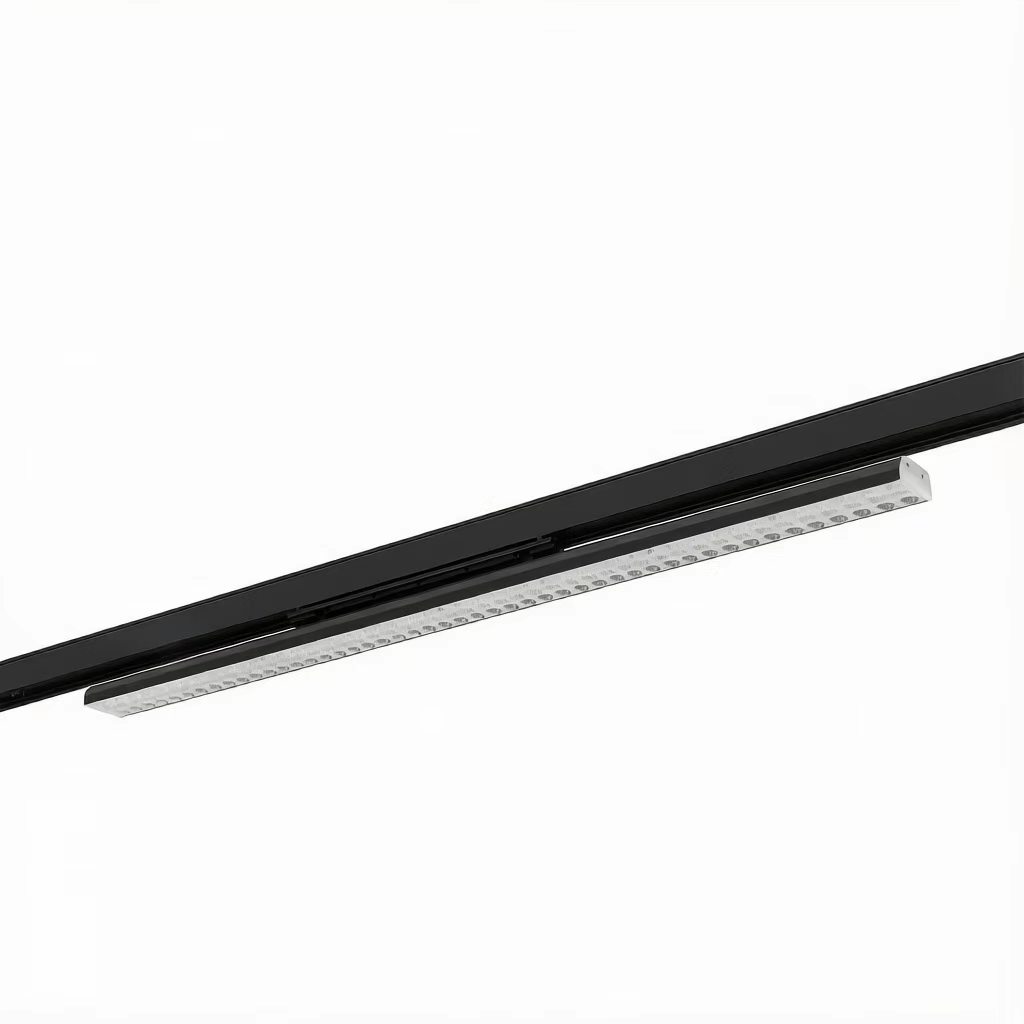
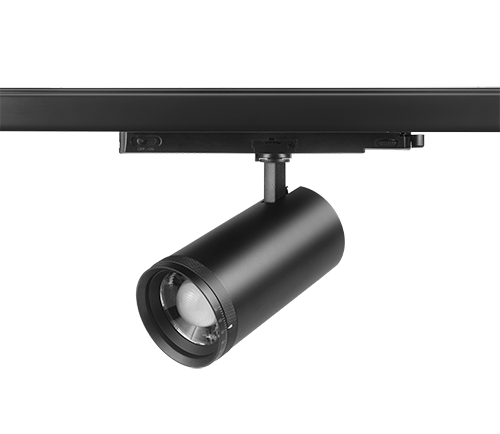
A linear track light uses a longer linear optical structure to distribute light over a wider area. Instead of concentrating the majority of the light into one narrow beam, it is designed to provide broader and more uniform illumination. This makes it particularly useful for sales floors, aisles, open commercial areas, and other spaces where consistent general lighting is more important than concentrated accent lighting.
The following comparison provides a practical overview.
| Feature | LED Track Light | LED Linear Track Light |
|---|
| Primary lighting function | Accent and directional lighting | General and wide-area illumination |
| Light distribution | Directional | Wide and relatively uniform |
| Typical application | Product displays, feature walls, showcases | Sales floors, aisles, open commercial areas |
| Switchable Power options | 15W - 20W - 30W | 30W - 35W- 40W - 45W or 45W - 50W - 55W - 60W |
| Switchable CCT options | 2700K - 3000K - 4000K | 3000K - 4000K - 5000K |
| Beam characteristic | 15°/24°/36°60° | 80°, withing 30° tilting |
| Product highlighting | Excellent | Suitable for broader illumination |
| High-efficiency application | 90-100Lm/w | 140lm/w; 160lm/w |
| High CRI option | CRI 90+ | CRI 90 & CRI80 |
The key point is that 3CCT track light & linear track light should not necessarily be treated as competing products. In many commercial projects, they perform different functions within the same lighting design.
3CCT LED track lights are particularly effective when the lighting objective is to direct attention. Their adjustable heads and directional optics allow lighting designers and installers to change the direction of the light according to the merchandise or display arrangement.
This makes track spotlights especially useful in retail environments where products are constantly being rearranged.
2.1 Product Displays
Fashion stores, footwear shops, cosmetics retailers, jewelry stores, and specialty boutiques often need stronger illumination on selected merchandise. A directional track spotlight can be aimed precisely at shelves, display tables, mannequins, or individual products.
2.2 Window Displays
Window displays are often designed to attract attention from customers outside the store. Track spotlights can be positioned to create focused visual highlights without requiring the entire area to be illuminated at the same intensity.
2.3 Feature Walls and Brand Displays
A feature wall may contain a new collection, promotional message, branded installation, or architectural element. Directional track lighting can provide the additional visual emphasis required to distinguish these areas from the general sales floor.
2.4 Showrooms
Automotive, furniture, bathroom, kitchen, and building-material showrooms frequently use directional lighting because the lighting needs to emphasize specific products rather than simply provide uniform illumination.
2.5 Galleries and Exhibition Areas
Where precise light distribution is important, adjustable track spotlights provide greater control over the direction and concentration of light. The final product specification should take into account beam angle, CRI, glare, mounting height, and the requirements of the displayed objects.
3. Switchable Power and CCT Selection for LED Track Lights
One of the major advantages of the current 3CCT LED track light is the combination of power selectable and CCT selectable technologyinto one single 3CCT track light.
The CCT track light range discussed in this article supports with the POWER switchable 15W-20W-30W and selectable CCT 2700K-3000K-4000K
This configuration gives commercial buyers greater flexibility when one product platform needs to cover different lighting requirements.
| Track Light Parameter | Available Options |
|---|
| 3Power | 15W - 20W - 30W |
| CCT | 2700K - 3000K - 4000K |
| Dimming | Triac dimmable |
| Main Lighting Function | Directional / accent lighting |
| Typical Applications | Retail, showroom, display, boutique |
| Beam Angle | Available in 15°/24°/36°/60°, choosing the right one according to your need |
Power selection is particularly useful because the required lighting level can vary significantly between applications. A 15W fixture may be sufficient for a smaller display or lower mounting position, while 20W or 30W may be more appropriate where higher illumination is required.
CCT selection provides another level of flexibility. Warm 2700K and 3000K light can support a more intimate or premium visual atmosphere, while 4000K provides a more neutral appearance for many commercial environments.
The actual CCT selection should always be determined according to the merchandise, interior design, target atmosphere, and lighting calculation rather than assuming that one CCT is universally suitable.
While track spotlights are primarily designed to highlight specific targets, linear track lights are more suitable when the project requires broader and more uniform illumination.
This makes them particularly useful for commercial spaces where the lighting requirement extends across a larger area.
4.1 Sales Floors
Large retail sales areas often require consistent illumination rather than a large number of individual accent beams. Linear track lights can provide broad light distribution across the floor while maintaining a clean and continuous visual appearance.
4.2 Retail Aisles
Supermarkets, department stores, and other retail environments contain long circulation routes and product aisles. A wide distribution pattern can help provide more consistent illumination across these areas.
4.3 Open Commercial Areas
Linear track lights can also be considered for open-plan retail environments, showrooms, galleries, and other commercial spaces where a broader lighting distribution is preferred.
4.4 General Illumination
A useful way to understand the role of a linear track light is to think of it as the base lighting layer of a commercial project. It provides the general illumination required for people to move through and use the space, while track spotlights can then be added where additional visual emphasis is required.
The linear track light range provides two power configurations depending on the CRI version.
CRI 80 Version with the switchable POWER range of 30W-35W-40W-45W
CRI 90 Version with the adjustable POWER range of 45W-50W-55W-60W
This gives distributors, lighting designers, and project contractors more options when matching the fixture to different installation requirements.
The higher-power CRI 90 version is particularly relevant to retail applications where color appearance is an important part of the customer experience.
The linear track light also incorporates selectable CCT technology with three color-temperature options: 3000K - 4000K - 5000K
This allows the same product platform to accommodate different commercial lighting concepts.
The purpose of CCT selection is not simply to offer more specifications. Its greater value is that it allows the lighting system to remain adaptable and flexible when the project requirements change.
For distributors and importers, this can also simplify product selection because a selectable-CCT platform can cover multiple application requirements without necessarily requiring separate fixed-CCT product versions.
6. Why Does Power & CCT Selectability Matter for Commercial Lighting in the Lighting Solutions?
Commercial projects are rarely completely static. Retail layouts change, tenants change, product categories change, and lighting requirements can evolve after installation.
A fixed-power, fixed-CCT luminaire provides a predetermined output and color temperature. If the project later requires a different lighting level or color appearance, replacing the fixture may be necessary.
Power and CCT selectable technology approaches the problem differently. Instead of defining the fixture around only one fixed operating condition, it provides multiple predefined settings within the same product platform.
For example, a distributor may use the same track light family across several projects while selecting 15W, 20W, or 30W according to the application. Similarly, the CCT can be selected between 2700K, 3000K, and 4000K according to the project requirements.
The linear track light provides the same principle at a higher power range, with selectable options from 30W to 45W for the CRI 80 version and 45W to 60W for the CRI 90 version.
This flexibility can be particularly valuable for B2B buyers because product standardization and application flexibility do not always have to be opposing goals.
7. How Switchable Power and CCT track light & linear track light Can Simplify LED Lighting Procurement
For lighting wholesalers and distributors, the number of product combinations can increase rapidly when every wattage and CCT requires a separate fixed product.
Consider a simplified track light range with three wattages and three fixed CCTs: 1pc of the POWER CCT switchable track light equals to at least 9 pcs of the other normal ones, therefore, when ordering, there's no more complex SKUs.
If additional housing colors, beam angles, dimming types, or other specifications are added, the number of possible configurations can increase further.
With a power and CCT selectable platform, several operating configurations can be incorporated into one product family. The actual SKU reduction depends on how the manufacturer structures the product range and whether other options such as housing color, beam angle, driver, and dimming are also integrated.
Therefore, the commercial advantage should not be expressed simply as a fixed percentage reduction in inventory. The more accurate benefit is simplified product selection, reduced specification duplication, and greater flexibility when planning stock for multiple applications.
For B2B distributors serving different retail customers, this can make a switchable product platform easier to manage than maintaining separate fixed-CCT and fixed-power products for every application.
8. Why Combine Track Lights and Linear Track Lights in the Commercial Lighting Projects?
A well-designed commercial lighting system often requires more than one layer of illumination. The linear track light can provide the base layer of general illumination, while adjustable 3才CCT track spotlights can create the accent layer that directs customers' attention toward important products and displays.
This combination can provide a more balanced lighting environment than attempting to use only one type of luminaire throughout the entire store.
This approach is particularly valuable when the retail layout changes frequently because the general lighting layer and accent lighting layer can serve different functions without requiring the entire lighting design to be rebuilt.
9. High CRI Linear Track Light for Retail Applications in the Commercial lighting
Color rendering is another important distinction when selecting commercial lighting. The linear track light is available in a CRI 80 version and a CRI 90 version, giving project buyers the ability to match the fixture to the application's color-rendering requirements.
CRI 80 can be appropriate for many general commercial environments where basic color rendering is sufficient. For applications where the appearance of merchandise is more important, CRI 90 can provide a higher color-rendering specification.
This is particularly relevant to:
For these applications, the lighting system should be evaluated not only according to wattage but also according to CRI, CCT, optical distribution, glare, and the actual appearance of the products under the selected light source.
10. How to Choose the Right Track Lighting Solution for Your Project, including the 3CCT track light & linear track light
Before selecting between a CCT track spotlight and a linear track light, commercial buyers should first define the lighting function of each area.
10.1. Determine the Required Lighting Function
If the project requires focused illumination on products or displays, consider track spotlights. If the project requires broad and uniform illumination, consider linear track lighting.
10.2. Select the Appropriate Power
For the track light range, the available power options are 15W, 20W, and 30W.
For the linear track light, the available options range from 30W to 45W for CRI 80 and from 45W to 60W for CRI 90.
The final selection should be based on mounting height, spacing, target illuminance, room dimensions, and lighting calculations.
10.3. Select the Required CCT
Track lights provide 2700K, 3000K, and 4000K selectable options.
Linear track lights provide 3000K, 4000K, and 5000K selectable options.
The appropriate CCT should be selected according to the product category, interior design, brand identity, and desired visual atmosphere.
10.4. Consider CRI Requirements
For general commercial areas, CRI90 may be sufficient depending on the project specification. For product-focused retail applications, CRI 90+ may be preferred when accurate color appearance is important.
11. Technical Comparison of 3CCT Track Light and Linear Track Light
The following table summarizes the product configurations discussed in this article.
| Specification | Track Light | Linear Track Light |
|---|
| Main Power Range | 15W - 20W - 30W | 30W - 35W - 40W - 45W (CRI 80) |
| High CRI Power Range | — | 45W - 50W - 55W - 60W (CRI 90) |
| CCT | 2700K - 3000K - 4000K | 3000K - 4000K - 5000K |
| Dimming | Triac dimmabble | Non |
| CRI | 90+ | CRI 80 / CRI 90 |
| Primary Lighting Role | Accent / directional | General / wide-area |
| Optical Character | Focused and adjustable | Wide linear distribution |
| Typical Applications | Displays, showrooms, feature areas | Sales floors, aisles, open commercial areas |
| Combined Application | Accent layer | General lighting layer |
This product structure allows one lighting system to address different commercial requirements without forcing every area of a project into the same lighting solution.
Frequently Asked Questions about CCT track light & linear track light
1. What is the difference between a LED track light and a linear track light?
A LED track light is primarily designed for directional and accent lighting, while a linear track light is designed to provide broader and more uniform illumination. LED track lights are commonly used for product displays, feature walls, mannequins, and other areas requiring focused light, whereas linear track lights are more suitable for sales floors, aisles, shelves lighting and open commercial spaces.
2. Is a linear track light better than a track light?
Neither product is universally better that's depending on what's your's commercial lighting demands. A linear track light is generally more suitable for broad and uniform illumination, while a track spotlight is better for directional accent lighting. For many retail and commercial projects, combining the two provides a more complete lighting solution.
3. What power options are available for the track light?
The track light discussed in this article provides selectable power options of 15W-20W-30W; 10W-20W-30W and 20W-25W-35W, more higher needing to customize. The appropriate setting depends on the required lighting level, mounting height, spacing, and application.
4. What power options are available for the linear track light?
The linear track light is available in 30W, 35W, 40W, and 45W for the CRI 80 version, and 45W, 50W, 55W, and 60W for the CRI 90 version.
5. What CCT options are available for the track light?
The track light provides selectable 2700K-3000K-4000K; 3000K-3500K-4000K; 3000K-4000K-6000K depending on your projects' needs.
6. What CCT options are available for the linear track light?
The linear track light provides selectable 3000K, 4000K, and 5000K color-temperature options.
7. Why is CCT selectable technology useful for commercial lighting?
CCT selectable technology allows one fixture platform to provide multiple predefined color temperatures. This can make the lighting system more adaptable to different retail environments, product categories, interior designs, and future project requirements.
8. Why is power selectable technology useful?
Power selectable technology allows the same fixture platform to operate at different power levels. This can simplify product selection and allow contractors and lighting designers to better match the fixture output to different areas within a commercial project.
9. Is CRI 90 important for retail lighting?
CRI 90 can be valuable in retail applications where accurate product color and appearance are important, including fashion, cosmetics, furniture, lifestyle products, and premium merchandise. The required CRI should ultimately be determined by the project specification.
10 Can track lights and linear track lights be used together?
Yes. Combining the two products is often an effective approach for commercial lighting. Linear track lights can provide general illumination across larger areas, while track spotlights can highlight products, displays, feature walls, and other areas requiring additional visual emphasis.
11. How should I choose between a track light and a linear track light?
Start by identifying the lighting function. Choose a track spotlight when directional accent lighting is required and choose a linear track light when broad, relatively uniform illumination is the priority. If the project contains both requirements, using both products can provide a more flexible lighting system.
Conclusion: Choosing the Right Lighting Combination for Commercial Lighting in the Lighting Solutions
The question of track light vs linear track light should not be treated as a simple competition between two products. They are designed to solve different commercial lighting problems.
The track light provides a flexible directional lighting solution with selectable 15W, 20W, and 30W power and 2700K, 3000K, and 4000K CCT options. Its primary strength is the ability to focus light on products, displays, feature walls, mannequins, and other areas that require visual emphasis.
The linear track light provides a different approach, with power-selectable configurations of 30W–45W for CRI 80 and 45W–60W for CRI 90, together with selectable 3000K, 4000K, and 5000K CCT options. Its primary strength is broader and more uniform illumination for sales floors, aisles, open commercial areas, and other spaces where general lighting is the priority.
For many retail and commercial projects, the strongest solution is therefore not choosing one or the other, but combining both. Linear track lights can establish the general lighting layer, while track spotlights provide the accent layer. Power and CCT selectable technology then adds another level of flexibility, allowing the lighting specification to adapt to different areas and changing commercial requirements.
For importers, wholesalers, distributors, lighting designers, and project contractors, this combination can provide a more practical way to standardize products while maintaining the flexibility required by modern commercial lighting projects.
If you are sourcing power and CCT selectable LED track lights or high-efficiency linear track lights for retail stores, showrooms, supermarkets, boutiques, or other commercial projects, the final product selection should be based on the required lighting function, power, CCT, CRI, optical distribution, installation conditions, and control requirements.
 Tel.+86 15013617190
 Email:info@pustlux.com