Led Track Lighting Layout Guide: How to Position Linear Track Lights in Modern Supermarkets
Linear track lights are a practical option for modern supermarket lighting layouts. This guide explains how to position linear track lights in modern supermarkets, how to approach different retail zones, and how B2B lighting project teams can specify suitable fixtures for new installations and refurbishment projects.
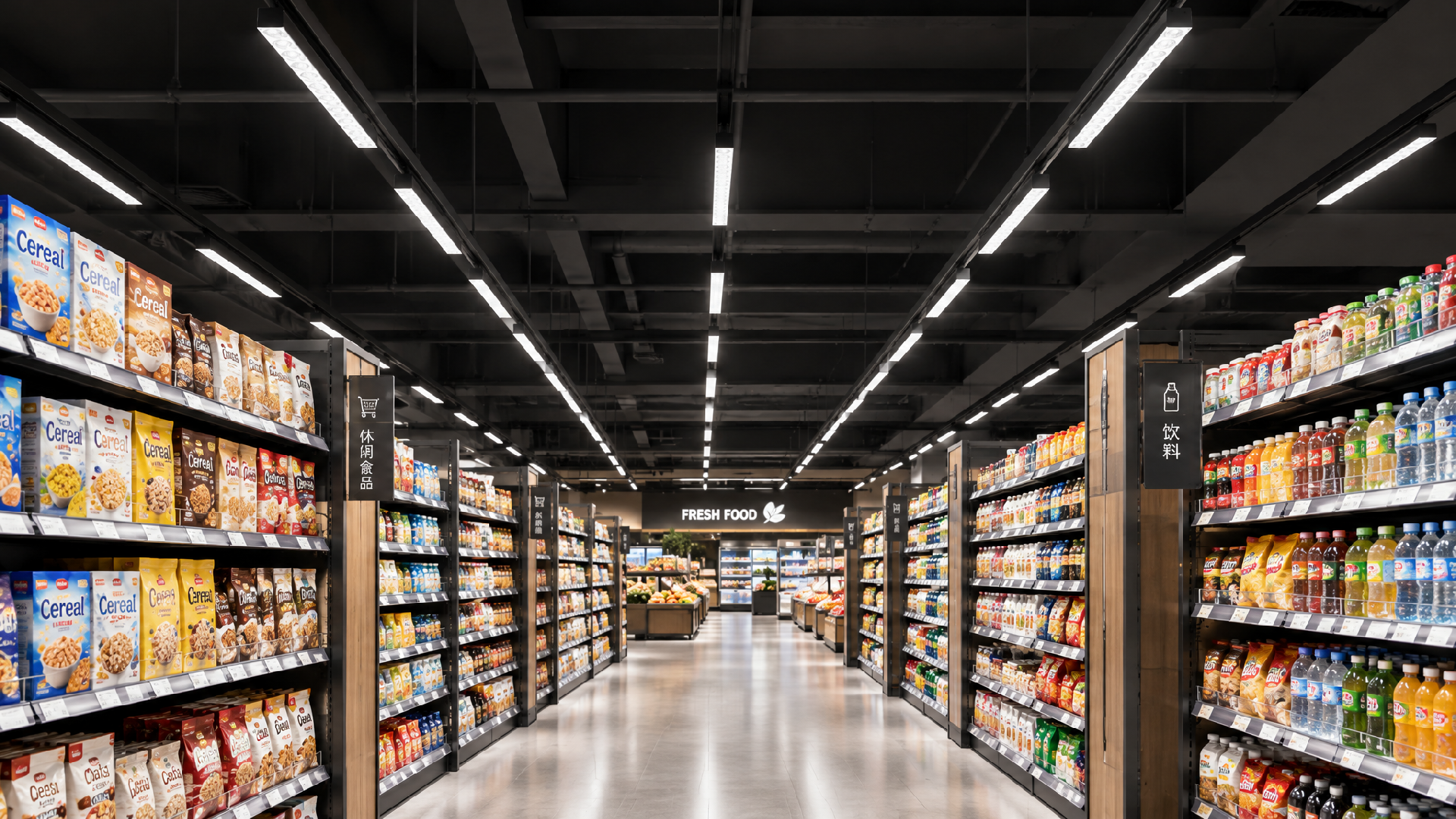
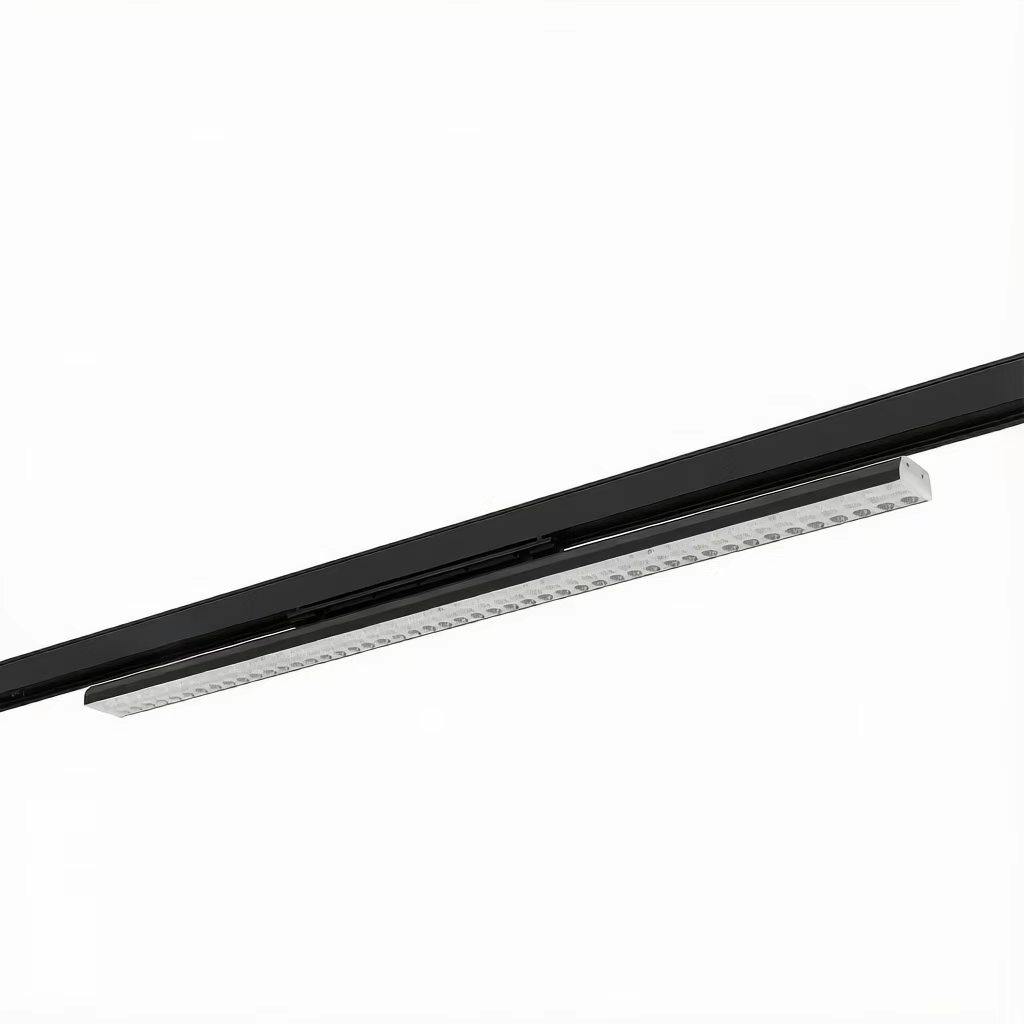
Linear track lighting combines a special light-emitting design with a track-mounted electrical connection. Depending on the product and track system, fixtures can be positioned along designated track runs and adjusted to suit the store layout.
In supermarket lighting applications, linear track lights can be used to illuminate long merchandise aisles, selected shelf areas, promotional displays, and other spaces where a broader, more continuous light distribution is desirable.
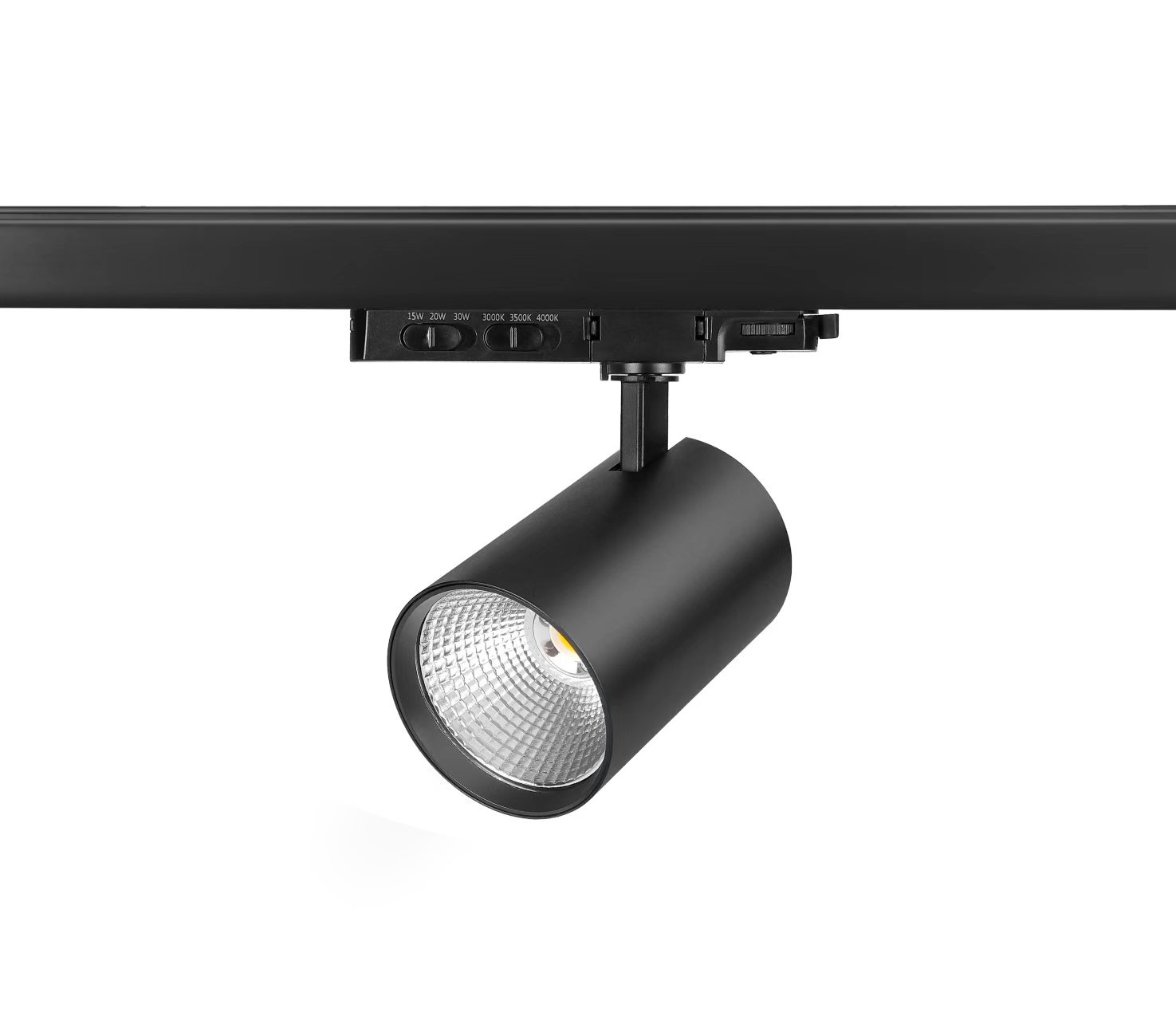
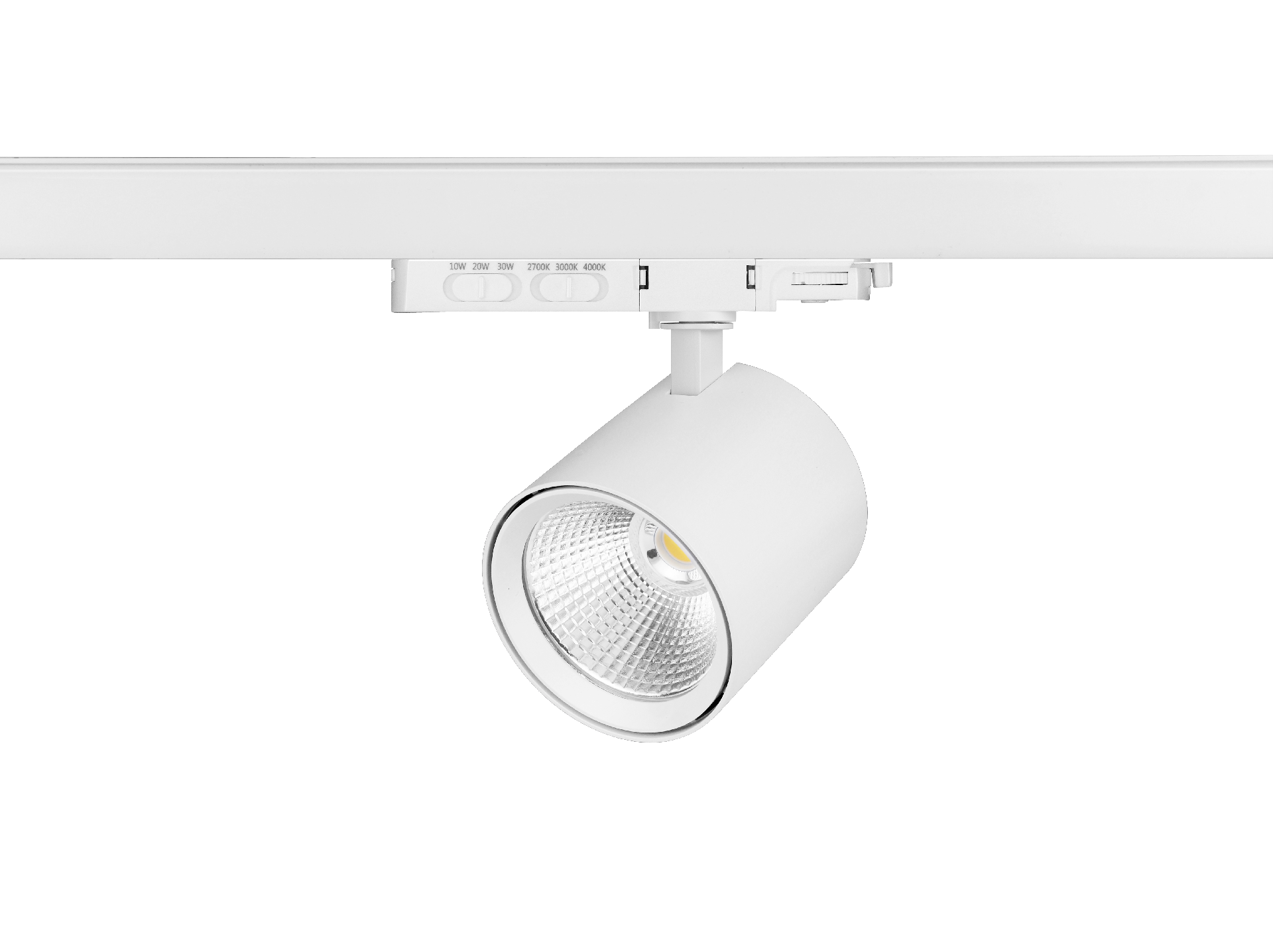
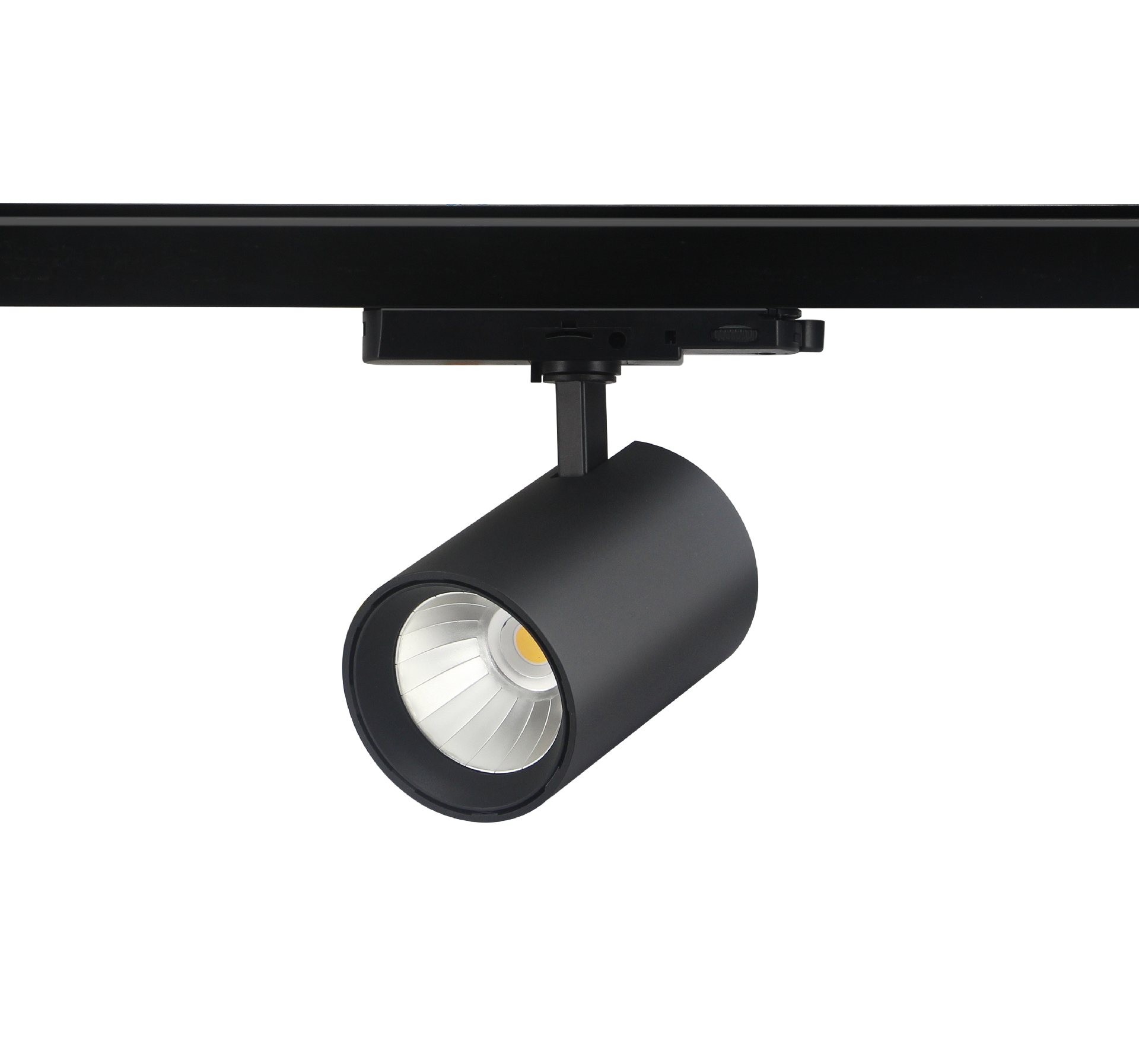
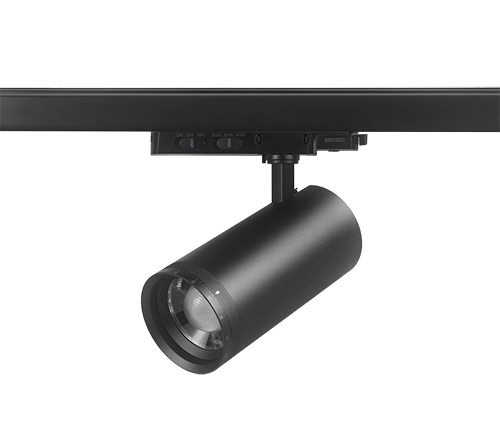
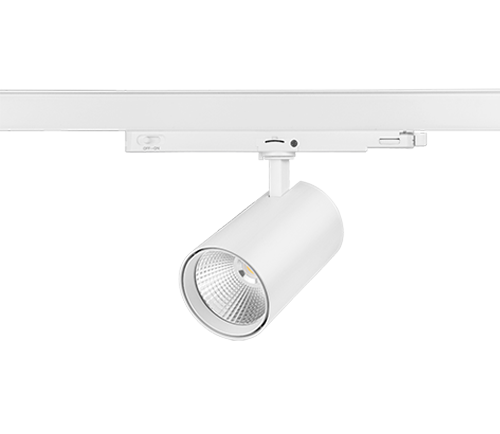
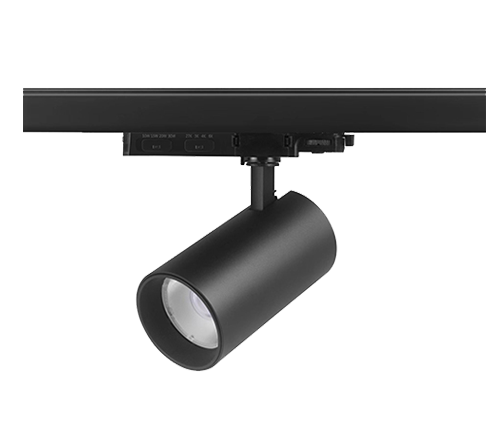
Led track spotlights typically concentrate light into a defined beam. They are useful for highlighting individual products, promotional displays, feature walls, and focal points. Linear track lights distribute light across a wider area, making them suitable for more continuous illumination.
| Design consideration | Linear track light | led track spotlight |
light distribution
| Typically broader and more continous | Usually more concentrated |
| Typical supermarket use | Aisles, sheld runs, selected general retail zones | Promotional displays, feature products, focal points |
| Visual effect | More uniform illumination when properly designed | Stronger accents and contrast |
| Layout flexibility | can be positioned along track lights | Individual heads can often be aimed independently |
| Best Applications | continous retail areas requiring balanced coverage | Areas requiring directional emphasis |
Neither type is automatically better for every supermarket lighting. A mixed commercial track lighting scheme may provide the best balance: linear lighting fixtures for general or aisle illumination, supplemented by directional spotlights where products need additional emphasis.
1.2 Why layout matters more than wattage alone in the commercial lighting
A high-wattage fixture does not guarantee good shelf illumination. If the light is installed too far from the shelves, poorly aligned with the aisle, or spaced too widely, the result may include dark areas, uneven brightness, and unnecessary light falling on the floor.
The purpose of a lighting layout is to place the right quantity and distribution of light where it is needed. Fixture output, optical design, mounting height, aiming angle, and spacing must therefore be evaluated together.
2. Start With a Supermarket Lighting Zone Plan with the Linear track lights & led track lights
Before deciding where to install linear track lights, divide the supermarket into functional zones. Each zone has different visual tasks and merchandise requirements.
2.1 Main shopping aisles
Main aisles are the primary circulation routes through the store. Lighting should help shoppers move comfortably, identify aisle signs, and see merchandise on both sides without distracting brightness or excessive dark patches.
Linear track lights & led track lights can be positioned parallel to the aisle direction where their distribution supports continuous illumination. The exact position depends on the shelf arrangement and the location of the track relative to the aisle.
2.2 Shelving and product displays
Products on shelves need enough vertical illumination for shoppers to identify packaging, read labels, compare colours, and recognise brands. Horizontal floor illuminance alone cannot describe the quality of shelf lighting.
Where shelf visibility is a priority, designers should assess vertical illuminance on representative shelf faces, including the top, middle, and lower levels. A layout that makes the floor bright but leaves the shelf fronts poorly lit may not perform well in a retail environment.
2.3 Fresh produce areas
Fruit and vegetable displays benefit from lighting that supports natural-looking colour appearance and comfortable visual inspection. High colour rendering can help merchandise appear more faithful to its actual colours, but the selected light source should also be assessed for its spectral characteristics, thermal effects, and suitability for the specific produce application.
For these areas, designers should review the colour rendering specification, colour consistency, glare, and maintenance requirements rather than choosing a fixture based on colour temperature alone.
2.4 Bakery, meat, seafood, and chilled displays
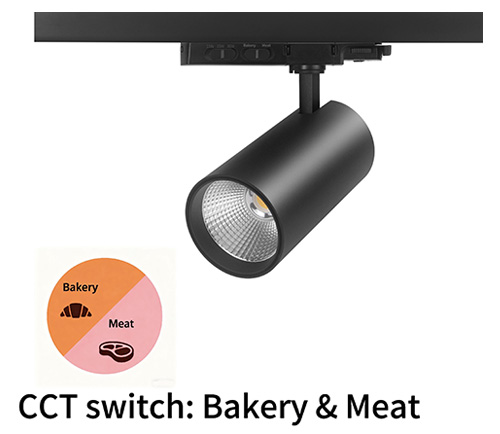
Different food categories may require different lighting characteristics. Bakery products, meat, seafood, and chilled merchandise should not automatically be treated as one lighting zone. The fixture and optical arrangement should be selected according to the merchandise, display equipment, hygiene requirements, and the retailer's presentation objectives. Especial in this area, if using the specialized food lighting products is the best choice like the led track light with the CCT for both Bakery & Meat lighting. It can distinguish between different products, pink color for meat lighting while worm lightin for bakery lighting.
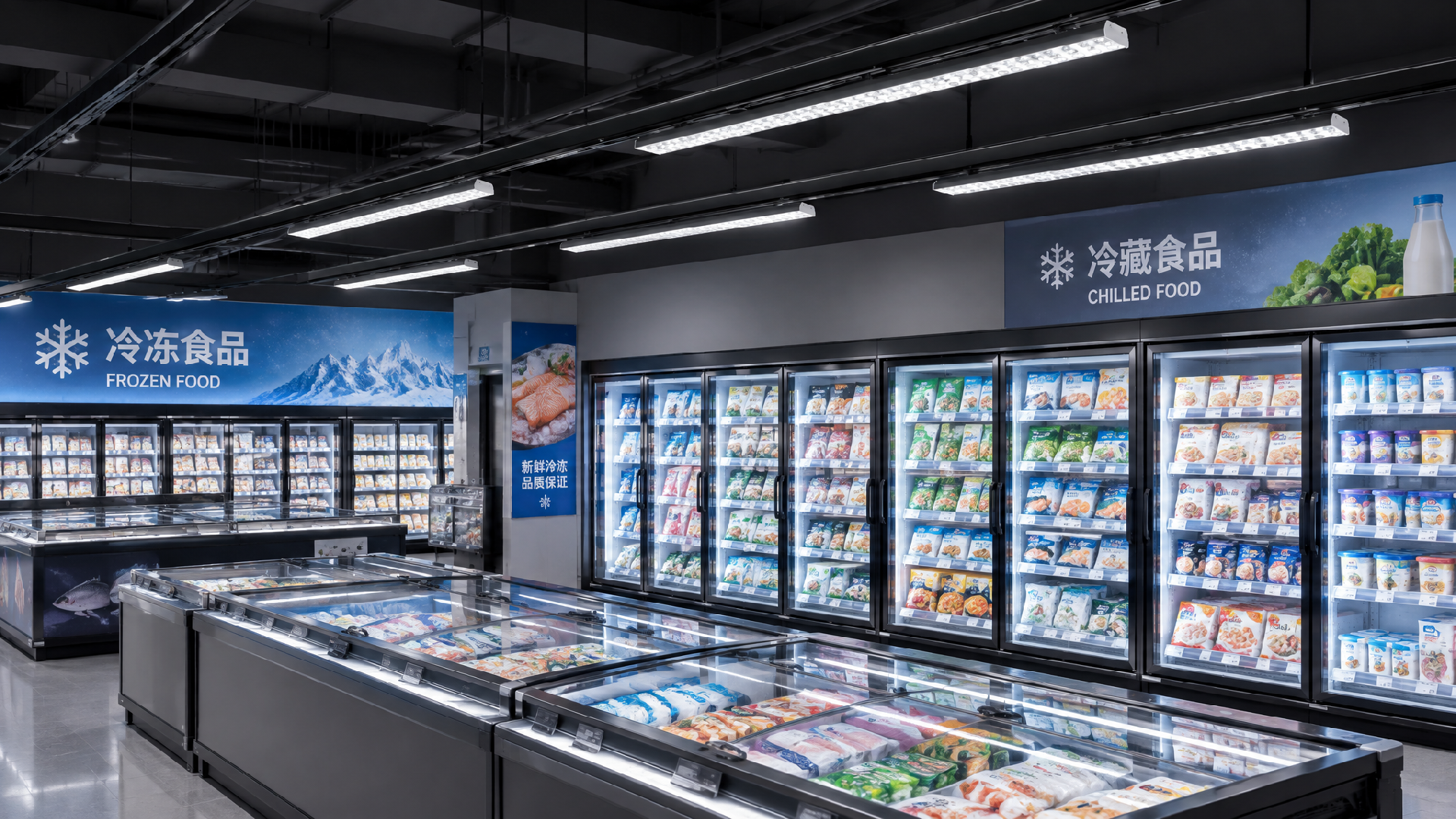
2.5 Promotional displays and end caps
End caps and promotional islands are often intended to attract attention. Linear track lights may provide broad coverage over a display, while adjustable spotlights can create more directional emphasis. Avoid excessive brightness contrast that makes surrounding products difficult to see.
3. How to Position Linear Track Lights Along Supermarket Aisles
The aisle layout is usually the best starting point for a supermarket lighting plan because it establishes the relationship between track runs, shelves, and customer circulation.
Step 1: Map the aisle and shelf geometry
Record the following information before positioning the track:
Ceiling height and available mounting points.
Aisle width and shelf depth.
Shelf height, number of levels, and display orientation.
Distance between adjacent shelf rows.
Location of signage, refrigeration equipment, and suspended displays.
Track system type and permitted fixture positions.
Areas where glare or reflections may affect customers.
Use an accurate floor plan wherever possible. In refurbishment projects, verify existing dimensions on site because shelving and ceiling services may differ from the original drawings.
Step 2: Align track runs with the retail layout
For long, straight aisles, a track run parallel to the aisle is a logical starting point. It creates a consistent reference for fixture placement and simplifies alignment with shelf rows.
However, placing a linear fixture directly above the aisle centre is not always the best solution. Depending on the fixture's distribution, this position may illuminate the floor well while providing insufficient vertical light on the merchandise.
Consider whether the primary task is floor illumination, shelf-front visibility, or a combination of both. In some layouts, the track may need to be offset from the aisle centreline or supplemented with additional lighting for the shelves.
Step 3: Determine the required light distribution
An 80° beam angle indicates a relatively broad nominal distribution compared with a narrow accent beam. It does not, by itself, guarantee uniform illumination across a particular aisle.
Actual coverage depends on the fixture's photometric distribution, mounting height, orientation, output, and the surfaces being illuminated. Use manufacturer-provided photometric files, such as IES or LDT data where available, to model the proposed arrangement.
Step 4: Establish preliminary fixture spacing
Fixture spacing should be determined through lighting calculations rather than a universal rule. Two fixtures with the same wattage and nominal beam angle can produce different results because their luminous flux, optical distribution, and glare-control characteristics may differ.
For a preliminary layout:
Define the target illuminance for the relevant task and surface.
Confirm the mounting height and fixture photometry.
Set an initial track lighting position and spacing in the lighting design software.
Review uniformity and potential dark areas.
Adjust the spacing, output, or track position.
Verify the final design against the project's requirements.
Do not finalise the spacing until the design has been checked for both horizontal and vertical illumination where relevant.
5. How to Choose Colour Temperature of Linear Track Lights for Different Supermarket Zones
Correlated colour temperature (CCT), measured in kelvin (K), describes whether the light appears warmer or cooler. It does not describe the accuracy of colour rendering, nor does it determine the brightness of a fixture.
For supermarkets, the most suitable CCT depends on merchandise, the retailer's visual identity, existing lighting, and the desired appearance of the space.
3000K: Warm retail ambience
A warm-white appearance can suit selected bakery displays, speciality food areas, and supermarkets seeking a warmer presentation. It may also be useful where the lighting needs to coordinate with warm finishes or an established brand identity.
4000K: A balanced commercial appearance
Neutral white is a common consideration for general supermarket areas because it can provide a balanced appearance for merchandise and circulation spaces. Whether it is appropriate should be evaluated alongside colour rendering, product packaging, and the retailer's preferred atmosphere.
5000K: A cooler white appearance
Cooler white light may be considered in selected environments where the retailer prefers a crisp visual impression. However, a higher CCT is not automatically brighter, more efficient, or more suitable for food displays.
Why selectable CCT is useful for B2B projects
A linear track light with selectable CCT settings can give distributors, contractors, and retailers more flexibility when planning a range of store formats.
Selectable CCT can simplify product selection and future project planning. It does not eliminate the need to define the required colour temperature for each zone before installation.
6. How to Choose Wattage and Luminous Efficiency
Wattage indicates electrical power consumption. Luminous efficiency, expressed in lumens per watt (lm/W), indicates how efficiently electrical power is converted into visible light output. Neither value alone tells a designer how much illuminance will reach a particular shelf or floor area.
For supermarket lighting projects, consider the following together:
Input power: the electrical load of the fixture at the selected setting.
Luminous flux: the total light output, measured in lumens.
Luminous efficiency: the relationship between output and power consumption.
Photometric distribution: how the light is distributed in different directions.
Mounting height and position: the distance and angle between the fixture and the target surface.
Lighting controls: whether dimming or zoning is required and compatible with the selected driver and control system.
What does 140 lm/W with Linear Track light mean for supermarket lighting?
A fixture rated at 140 lm/W can deliver a high amount of luminous flux relative to its electrical input. This can be valuable in commercial projects where operating costs and connected load are important.
However, the specification should be interpreted carefully. Confirm whether 140 lm/W is the maximum efficacy, a typical value, or a tested value for a particular wattage, CCT, and CRI configuration. Do not assume that every selectable setting achieves the same efficacy.
For procurement teams, request the complete technical datasheet and the relevant test conditions. For designers, use the actual lumen output and photometric file for the specified configuration in the lighting calculation.
7. Why Colour Rendering Matters in Supermarkets Lighting
Colour rendering influences how merchandise colours appear under a light source. In supermarkets, this can affect the visual presentation of fruit, vegetables, packaged foods, clothing, flowers, and other products.
The Colour Rendering Index (CRI or Ra) is a widely used measure of colour-rendering performance. A higher CRI can be beneficial where colour discrimination and merchandise presentation are important, but CRI alone does not fully describe how a light source renders every colour.
A CRI 90 version may be appropriate for applications with more demanding colour-rendering requirements, while a CRI 80 version may suit other commercial areas where the specification permits it. The decision should be based on the project's performance requirements, not on a blanket assumption that one CRI level is best for every zone.
For fresh food, bakery, meat, and seafood areas, conduct a sample evaluation where possible. The final appearance depends on the merchandise, the light source's spectrum, display materials, and surrounding lighting.
8. Linear Track Light Layout for Different Supermarket Areas Lighting
The following table provides a practical starting point for lighting designers and project contractors. It is not a substitute for local standards, project-specific calculations, or the retailer's requirements.
| Supermarket Zone | Primary lighting objective | Linear track lighting consideration |
Main aisles
| Comfortable circulation and clear product visibility | align track lights with the aisle geometry, verify uniformity |
| Shelf rows | Reafable labels and visible merchandise | check vertical illumination at multiple shelf levels |
| Fresh food lighting | Natural-looking merchandise colors | review CRI, spectral charaeteristics, glare and display appearance |
| Bakery lighting | attractive presentation and clear product detail | select CCT and CRI to suit the merchandise |
| meat and seafood | accurate produce inspection and suitable display appearance | verify specialist lighting requirements |
| refrigerated displays lighting | visible product with controlled reflections | assess glass reflections, fixture location, and environmental suitability |
Chectout counters
| comfortable task visibility | check shadows, screen reflections and visual comfort |
A supermarket lighting plan should treat each zone as part of one coordinated system. CCT, CRI, brightness, and fixture appearance should be selected consistently with the retailer's design objectives.
9. Linear Track Lights vs. led track spotlight Lighting in Supermarket Projects
Led track spotlight lighting can be appropriate for stores with stable layouts and clearly defined general-lighting requirements. Track-mounted systems can offer additional flexibility where the store changes its displays, shelf arrangements, or promotional zones.
The right comparison is not simply between one fixture type and another. It is between complete lighting solutions that meet the same performance criteria.
Advantages of a track-based approach
Layout flexibility: Fixture positions can be planned around the store's merchandise layout and, where the system permits, adjusted during future changes.
Targeted illumination: Linear fixtures and spotlights can be combined to support general visibility and selected display emphasis.
Project adaptability: A suitable track system can simplify certain modifications compared with rewiring individual fixed points, although any changes must comply with the track system's electrical and installation requirements.
Product configuration options: Selectable wattage and CCT may help standardise fixtures across projects with different lighting needs.
Points to verify before specifying track lighting
Track systems are not interchangeable by default. Confirm compatibility among the track, adapter, electrical circuit arrangement, fixture, driver, dimming controls, and installation requirements. A track-mounted fixture must be compatible with the exact track system specified for the project.
Also consider the total connected load, circuit design, emergency lighting requirements where applicable, and access for maintenance.
10. Why Selectable Power and CCT Matter to B2B Buyers in commercial lighting
For importers, distributors, wholesalers, and contractors, a selectable linear track light can offer value beyond its on-site lighting performance. A carefully specified product family can help simplify product selection across multiple commercial projects.
Potential commercial benefits include:
Simplified SKU planning. A selectable product may reduce the number of separate fixed-output variants that need to be purchased and stocked. The actual SKU reduction depends on the available configurations and the buyer's existing product range.
More adaptable project procurement. Contractors can select a suitable configuration for a project once the design and installation requirements have been confirmed.
Reduced risk of incorrect specification. Clear labelling, commissioning procedures, and installer training can help ensure the fixture is set to the intended power and CCT.
Support for different store formats. A consistent product family can make it easier to specify lighting for small neighbourhood supermarkets, larger grocery stores, and other commercial retail spaces.
Selectable wattage and CCT should not be treated as a substitute for lighting calculations. The correct configuration still needs to be chosen for each application, and the selected setting must be recorded in the project documentation.
11. B2B Specification Checklist for Supermarket Linear Track Lights
Before approving a product for a supermarket lighting project, distributors and contractors should confirm the following technical and commercial details.
| Specification | What to confirm |
| Wattage | Available settings and input power at each setting |
| CCT | Available CCT and selection method
|
| Luminous flux | output at the selected wattage, CCT and CRI |
| Beam angle | nominal beam angle and full hpotometric distribution |
| CRI | CRI value and any additional color rendering requirements |
| Track compatibility | track type, circuit arrangement, adapter and electrical rating. |
For projects in Europe, confirm the applicable product safety, electromagnetic compatibility, energy-related, and other legal requirements for the specific product and market. Do not rely on a generic statement of compliance without checking the documentation for the exact model.
12. Frequently Asked Questions About Supermarket Linear Track Lighting
Q1. How should linear track lights be positioned in supermarket aisles?
Start by aligning the track layout with the aisle and shelf geometry. Then determine fixture positions and spacing using the mounting height, aisle width, shelf dimensions, photometric distribution, and required illuminance. Verify both floor and shelf illumination where relevant.
Q2. What is the best beam angle for supermarket linear track lights?
There is no single best beam angle for every supermarket. A broad distribution, such as a nominal 80° beam, may be useful for certain aisle or retail applications, but suitability depends on the fixture's full photometric distribution, mounting height, and target area. Review the manufacturer's photometric files before finalising the layout.
Q3. Should supermarket linear track lights be 3000K, 4000K, or 5000K?
The appropriate CCT depends on the store's visual identity, merchandise, and lighting objectives. 3000K produces a warmer appearance, 4000K a more neutral appearance, and 5000K a cooler appearance. Evaluate colour rendering and merchandise appearance alongside CCT.
Q4. Is CRI 90 necessary for supermarket lighting?
Not necessarily for every zone. CRI 90 may be preferred where colour appearance is especially important, while CRI 80 may meet the requirements of other areas. The final selection should follow the project specification and any applicable requirements.
Q5. Can linear track lights replace all conventional track spotlights?
Not always. Linear track lights can provide continuous illumination in suitable layouts, while spotlights can add directional emphasis to promotional displays and selected products. A combined solution may be more effective than using one fixture type throughout the entire store.
Q6.Can selectable wattage reduce supermarket lighting inventory?
It can reduce the number of separate fixed-wattage variants a distributor or contractor needs to stock when one product supports multiple suitable configurations. The actual benefit depends on the product range, demand patterns, available settings, and the buyer's existing inventory strategy.
Q7. What information should a lighting supplier provide for a supermarket project?
Request a complete datasheet, actual lumen output, efficacy data, CCT and CRI options, beam angle, photometric files, electrical and track compatibility information, control specifications, applicable compliance documentation, and warranty terms. For a large project, also request samples and technical support for the lighting calculation.
Q8. Is 140 lm/W enough to determine whether a linear track light is energy efficient?
No. Efficacy is an important comparison metric, but the project should also consider the light delivered to the target surfaces, operating hours, controls, maintenance, and the actual configuration used. Confirm that the declared efficacy applies to the selected model and operating setting.
Q9. How can a supermarket lighting supplier support an OEM project?
A qualified manufacturer may be able to provide product configuration options, private labelling, packaging customisation, technical documentation, and project-specific support. Buyers should confirm the available services, minimum order quantities, lead times, quality-control process, and compliance documents before placing an order.
Conclusion: Design the Layout Around the Merchandise and the Space of the linear track light in commercial lighting
A successful supermarket lighting layout begins with the store's geometry and visual tasks, not with a fixture wattage or beam angle in isolation. Position linear track lights according to aisle direction, shelf height, mounting conditions, and the required balance between floor and vertical illumination. Evaluate CCT, CRI, glare, uniformity, track compatibility, and photometric performance before finalising the specification.
For supermarket developers, lighting designers, electrical contractors, and B2B lighting distributors, selectable-power and selectable-CCT linear track lights can offer useful project flexibility when the available settings match the design requirements. High efficacy can also support energy-conscious specifications, provided the claimed performance is verified for the exact product configuration.
Pustlux supplies LED track lighting solutions for commercial applications. If you are sourcing linear track lights for supermarket projects, contact Pustlux to discuss available power and CCT configurations, optical options, technical documentation, and OEM/ODM requirements. Share your ceiling height, aisle dimensions, shelf layout, target illuminance, and project location so the appropriate fixture configuration can be evaluated for your application.
 Tel.+86 15013617190
 Email:info@pustlux.com